 Busimy
Envelope budgeting: how it works and how to do it without cash
The envelope method means splitting the month's income into envelopes, one per category (groceries, transport, eating out), and only spending what's in each one. When an envelope is empty, spending in that category stops until next month. Today the same thing is done with category budgets in an app.
How it works
- When you get paid, set aside fixed costs (rent, utilities) and savings first.
- Split what remains into envelopes for each variable spending category.
- Every purchase comes out of its envelope.
- If an envelope runs out, either wait for next month or move money from another envelope, on purpose.
An example split
With $2,000 for variable spending in the month:
| Envelope | Amount | Per week |
|---|---|---|
| Groceries | $900 | $225 |
| Transport | $280 | $70 |
| Eating out and delivery | $400 | $100 |
| Clothes and home | $220 | $55 |
| Unexpected | $200 | $50 |
Why it works
- It makes the limit visible: you see what’s left before spending, not after.
- It forces a choice: if you want more for eating out, it comes from another envelope.
- It's simple: you don't need to know finance to use it.
Envelopes without cash
With cards and phone payments there are no paper envelopes, but the idea is the same: a budget per category and recording every expense. What matters is seeing what's left in each "envelope" at the moment of spending, from your phone.
How Busimy does it
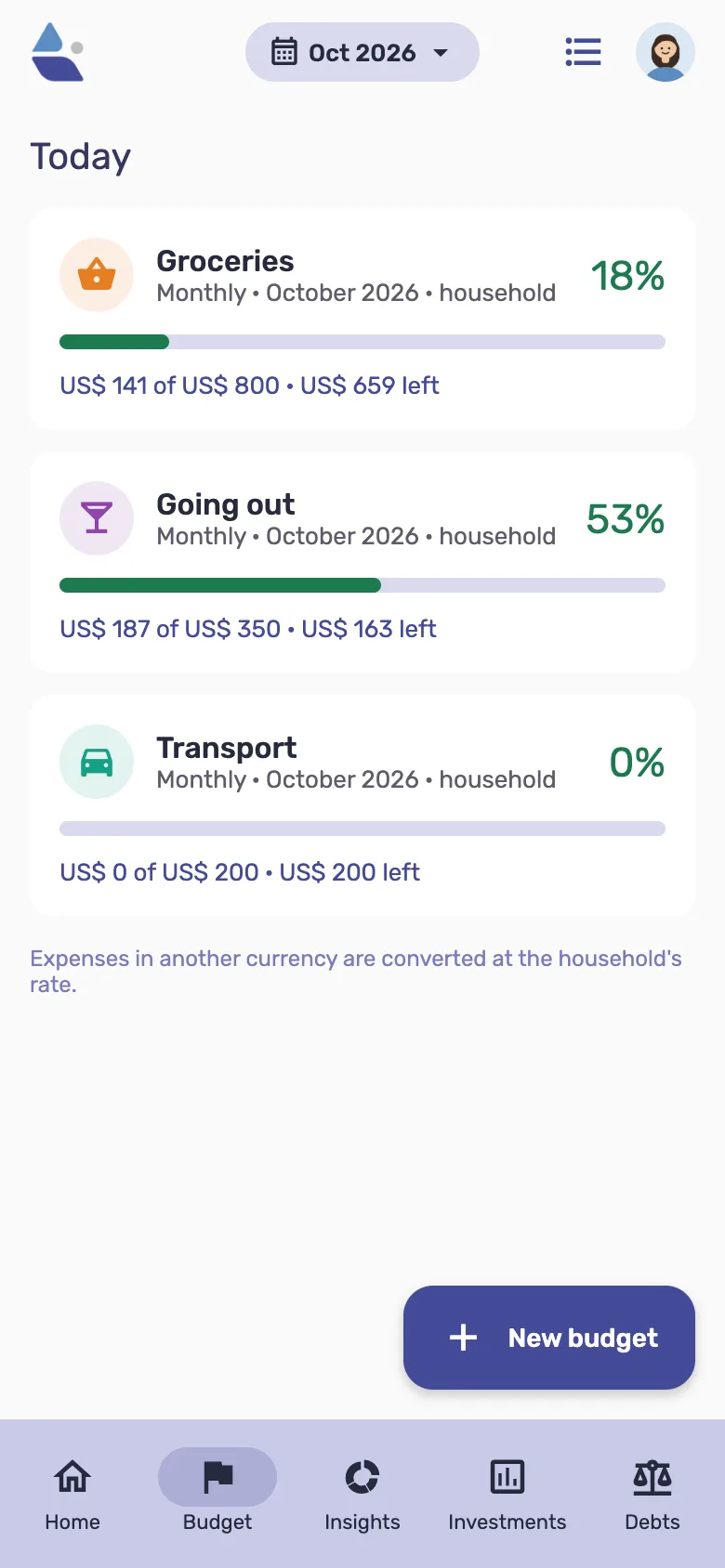
In Busimy each category budget is an envelope: you see what's left this month and the app warns you when you're close to the limit. If you share expenses, the budget can be for the whole household.
Frequently asked questions
- What happens to what's left in an envelope?
- Move it to savings or roll it into the same envelope next month. What doesn't help is using it to cover another envelope without thinking.
- How many envelopes should I have?
- Between 4 and 8. With too many it gets hard to follow; with too few, the limit means nothing.
- Does it work for shared expenses?
- Yes: one shared envelope for household costs, and each person keeps their own for personal spending.