 Busimy
Emergency fund: how much to save and where to keep it
An emergency fund is money set aside only for the unexpected: losing your job, an illness, an urgent repair. The usual advice is 3 to 6 months of essential expenses, somewhere you can withdraw right away and that holds its value. You build it bit by bit, saving a fixed amount each month before spending.
How much to have
Base it on essential expenses, not everything you spend: rent or mortgage, building fees, utilities, food, transport, health insurance, school. What you'd keep paying even if no money came in.
With a stable job and two incomes at home, 3 months is usually enough. If you're self-employed, have variable income or are the only earner, aim for 6.
An example with numbers
A household's essential expenses are $3,000 a month. The fund should be between $9,000 (3 months) and $18,000 (6 months).
Saving $500 a month, they reach 3 months in 18 months. It sounds long, but from the first month they have a cushion they didn’t have before.
Where to keep it
- Somewhere you can withdraw the same day: a high-yield savings account or a money market fund.
- Where it keeps up with inflation: if your currency loses value often, keep part of it in a more stable currency.
- Separate from everyday money, so you don’t spend it without noticing.
- Not in investments that can drop right when you need them (stocks, crypto).
When to use it (and when not)
Yes: losing your income, a health emergency, a repair that can't wait. No: holidays, a new phone or a sale. If you use it, refilling it is next month's priority.
How Busimy does it
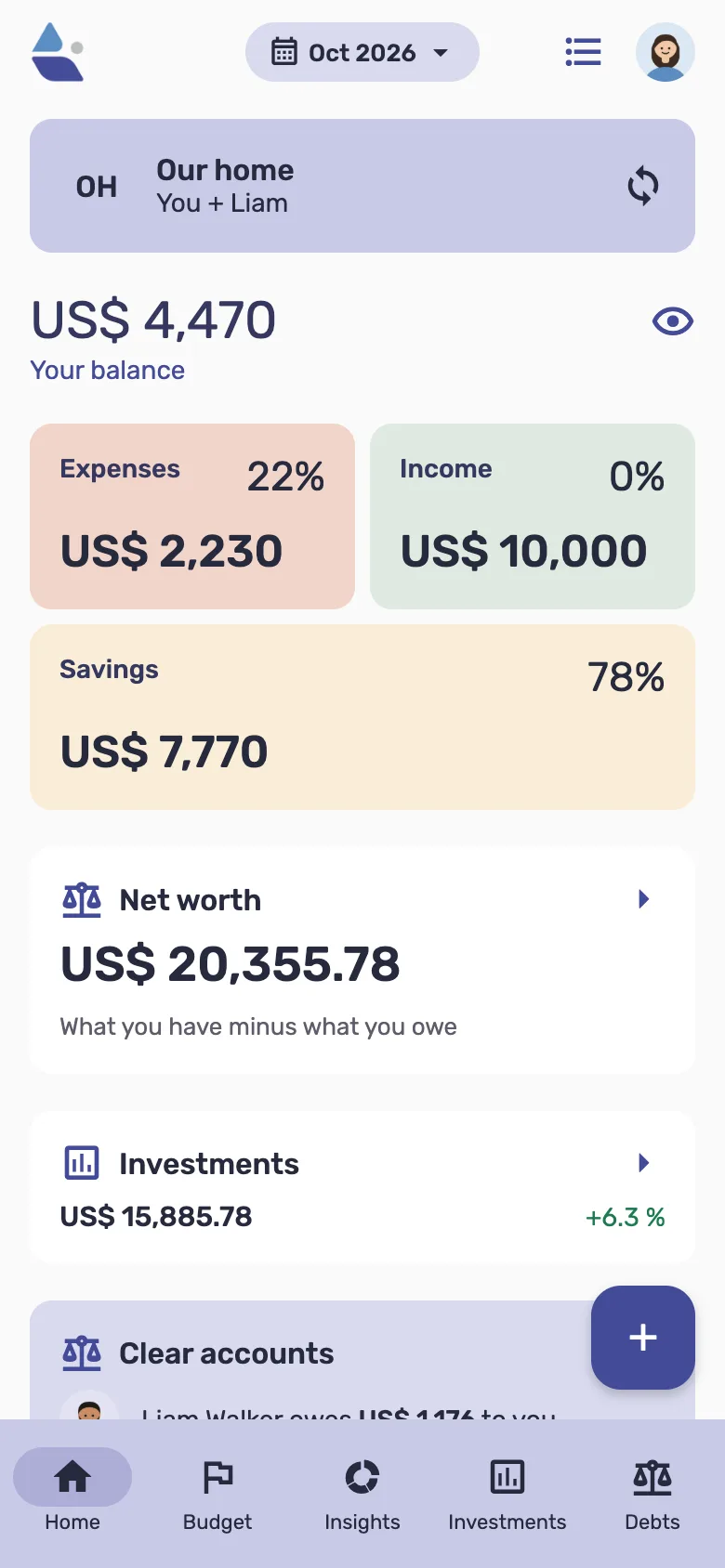
In Busimy you can keep a wallet for the fund and set a monthly savings goal in Budgets. You see how much you have and, in Metrics, how much you really spend on essentials to know how much you need.
Where to keep it: options compared
| Option | Availability | Beats inflation | Risk |
|---|---|---|---|
| High-yield savings account | Right away | Sometimes | Low |
| Money market fund | Same or next day | Sometimes | Low |
| Term deposit / CD | At maturity | Depends on the rate | Low |
| Stocks or crypto | Right away, but the price moves | May | High: not for an emergency fund |
How much, depending on your situation
- Steady salary: 3 months of fixed costs.
- Variable income or freelance: 6 months or more.
- Single-income household or with kids: closer to 6 than 3.
Frequently asked questions
- Emergency fund first, or investing?
- The fund first, at least a couple of months of expenses. Without it, any surprise forces you to sell investments at the worst time or borrow.
- What if I have debts?
- Build a small fund (one month of expenses), then focus on high-interest debt such as a card balance. With that done, finish the fund.
- For a couple, one fund or one each?
- It can be one for the household’s costs, and each person’s own for personal ones. What matters is that both know how much there is and what it’s for.