 Busimy
Joint or separate accounts? How couples organize money
Couples organize money in three ways: everything in a joint account, everything separate splitting each cost, or a mixed system where each puts money into a shared pot and keeps the rest. The mixed one is the most common because it combines transparency on shared costs with independence on your own.
The three ways, compared
| System | Pros | Cons | Works well if |
|---|---|---|---|
| All joint | Simple, one number | Less independence; personal spending gets debated | You earn similarly and see money alike |
| All separate | Full independence | You split every cost and keep count | You're just starting or incomes change a lot |
| Mixed | Shared costs clear, personal free | You must agree on how much each puts in | Almost always |
How the mixed system works
Each puts an amount (or a share of income) into a common account or pot that pays rent, utilities and groceries. The rest is each one’s own, with no need to explain it.
Example: $3,000 of shared costs a month. Anna earns $6,000 and Ben $4,000; by income, Anna puts 60% ($1,800) and Ben 40% ($1,200). Both keep 70% of what they earn for themselves.
You don't need a new account
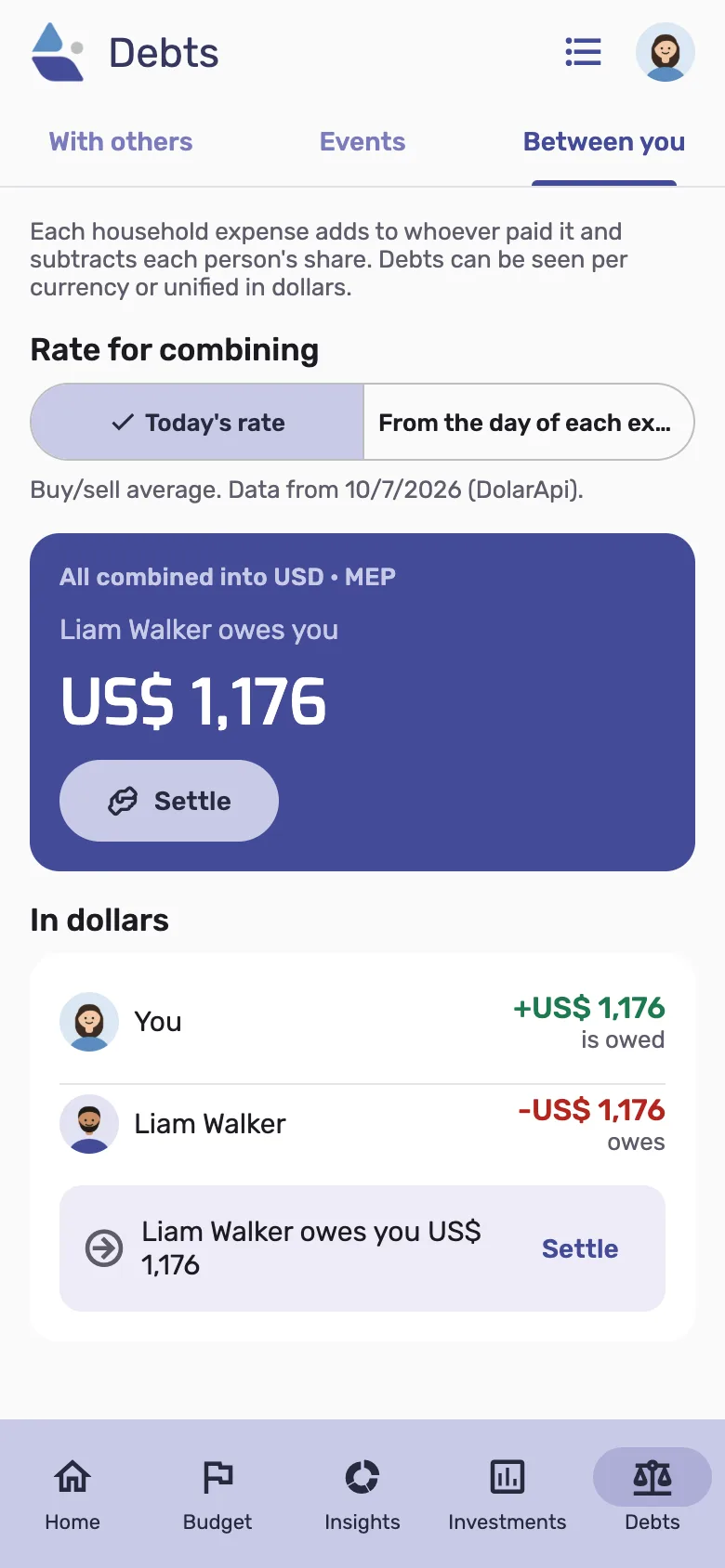
A shared pot can be virtual: each pays from their own account and an app keeps count of what each put in and who owes whom. No paperwork, no bank fees.
Frequently asked questions
- What if one earns much more?
- Splitting by income is the most common: each puts the same share of what they earn, not the same amount.
- What about savings?
- You can have a shared goal (a trip, a move) besides each one’s own. What matters is agreeing on it.