 Busimy
Personal finance for beginners: where to start
You don't need to know about investing to start with personal finance: first you need to know how much comes in and how much goes out. The order that works is: track your spending for a month, build a simple budget, save an emergency fund, pay off expensive debt, and only then invest.
The order matters more than the details
Most people start at the end: which investment is best, which trading app to download. But investing while paying credit card interest, or without a cushion for the unexpected, usually ends with selling at the worst time or going into debt.
The order below isn't a rigid rule, but each step makes the next one easier.
The 6 steps
- Record everything you spend for a month, small things too. Without this number, everything else is guesswork.
- Separate fixed costs (rent, utilities, loan payments) from variable ones (groceries, eating out, delivery).
- Build a budget: how much you want to spend per category next month, with an amount for savings from the start.
- Save an emergency fund of 3 to 6 months of fixed costs.
- Pay off high-interest debt, starting with your credit card if you don't pay it in full.
- With that in place, start investing what you won't need in the next few years.
Three numbers worth knowing
- Your net monthly income: what actually comes in, after taxes and deductions.
- Your average spending over the last three months: a single month is misleading.
- Your savings rate: what's left divided by what comes in. At 10% you're ahead of most people; at 20% you're moving fast.
Common beginner mistakes
- Trying to control everything at once and quitting after a week. A simple method you keep beats a perfect one you drop.
- Saving "whatever's left" at the end of the month: there's rarely anything left. Set it aside as soon as you get paid.
- Paying the card minimum and thinking everything is fine.
- Keeping savings in a currency that loses value quickly.
How Busimy does it
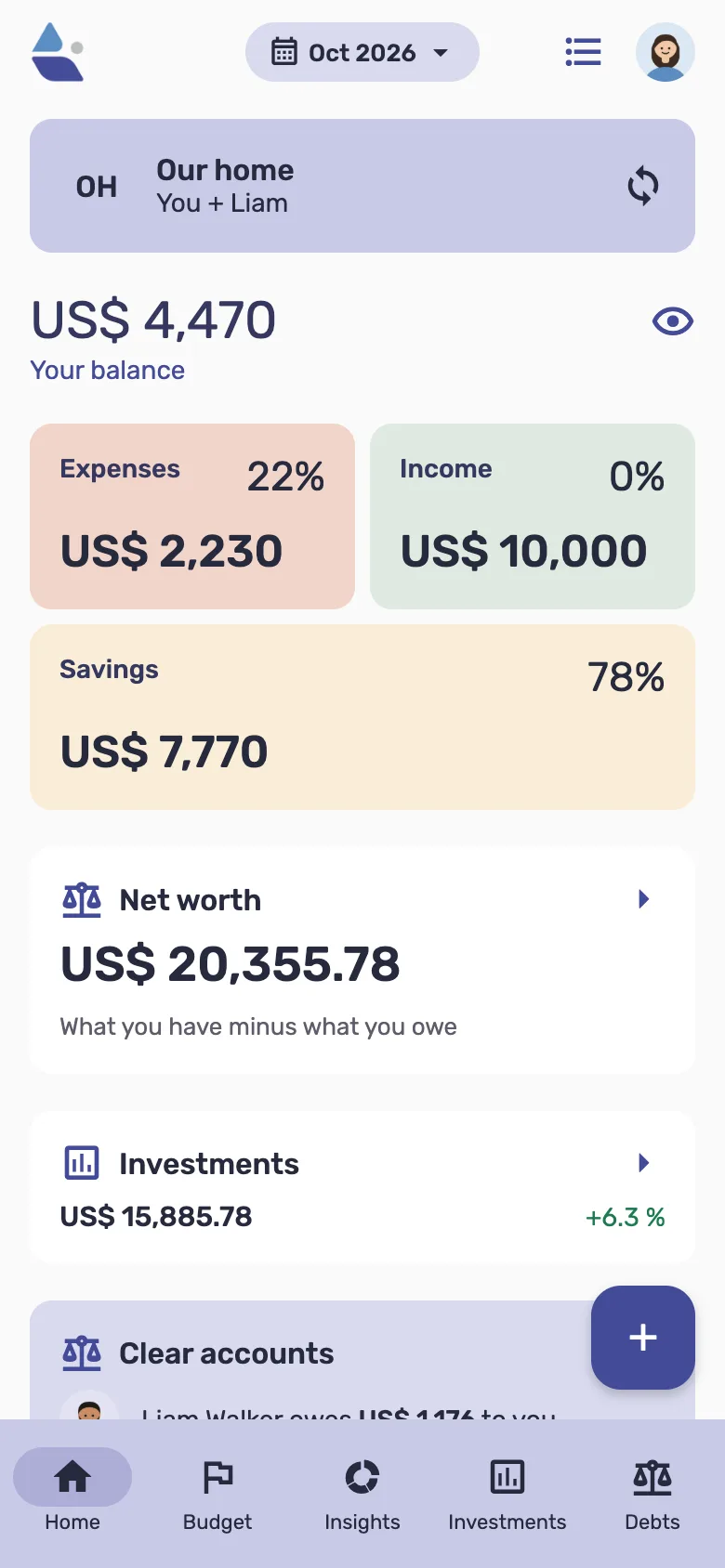
Busimy is built for the first step, which is the hardest: recording without effort. Say the expense out loud, snap the receipt or upload your card statement, and the app builds the categories, the budget and the month's savings, in whatever currency you use.
Frequently asked questions
- How much do I need to earn to start managing my money?
- There's no minimum. On a low income it matters even more, because any surprise weighs more.
- Do I need a spreadsheet or an app?
- Either works if you use it. An app has the advantage that you record on the spot, from your phone, not from memory at the end of the month.
- How long does it take?
- Recording takes a few seconds per expense. Reviewing the month, about 15 minutes. The hard part is the first two months; after that it’s a habit.